How to be Creative When You Have Raging ADHD (or even if you don’t, probably)

As I write this, I’m still figuring it out. I’m no guru. I’m a fraud!

Like several others, I’ve learned a lot about myself over the course of the pandemic— mostly, parts of me which had been screaming for years to be acknowledged, only to be drowned in repetitive tasks, fixations on money, time, or my weight, and White Claws. My biggest takeaway has been that I am, and always have been, someone who favours art, culture and freedom over ‘left-brain’ activities, routine and structure. I want to live a creative life— jump from art form to art form, make my own way, etc. I figured this should be simple enough.

Then I spent roughly six months living exactly the same way I always had. Nothing written, painted, recorded, created— besides obligatory research papers and a sad credit score. And I don’t blame myself for that, seeing as though those six months were spent locked in a small apartment during a global pandemic. 

  1. Start Shitty. This is important. In the time that I’ve spent ruminating about how to start writing, what topic to start with, what medium to use first, why I didn’t start sooner, etc., I could have written a full-length novel. Just start. Set aside an hour of your time and focus your energy on one specific creative outlet. This is obviously most fruitful when you’re genuinely in the mood to create, but if you’re finding yourself in a rut— constantly thinking about creating but never feeling up to it— Just. Make. Something. Don’t worry about whether or not it will suck, because the reality is it’s probably going to. No one creates a masterpiece on their first attempt— you can always edit your work, as long as you have something to edit. In any case, you will feel 100 times better because you finally did it! 
  2. Harness your hyperfixations. Most of us neurodivergent folk have experienced becoming completely and utterly engulfed by a special interest— a sudden calling to compulsively sift through wikipedia articles on the history of former Yugoslavia, play the Sims, or bake pies until ten hours have passed in what felt like a blink. Stop calling this “wasting time” and start calling it passion! If you wake up with a sense of curiosity and openness about a creative medium you’ve been interested in forever, give yourself permission go on a deep dive of hip-hop dancing youtube tutorials, or spend the day making sketches of the plants in your bedroom. If you have ADHD and can keep plants alive, you already have it together more than I do and here you are, reading something I created! Go make stuff for me to look at!
  3. Change your scenery. If you’re constantly creating in the same place, you’re essentially recycling your sources of inspiration— and could end up hitting a wall. If you have some extra cash, I highly suggest the ‘staycation’ method: Find a hotel or Airbnb in your area that inspires you. Romanticize it a bit— create a playlist that lines up with the energy you’re trying to communicate through your art, bring along some pieces of home to create a space that’s comforting, without the distractions that inevitably come with literally being at home— i.e. a neglected pile of laundry, a well-meaning but distracting pet (or person), or spinach that is wilting that you should really use for a smoothie or something. A more accessible, day-to-day version of this is settling in for an afternoon at a coffee shop, nearby park, or even just a different room of your home than your go-to workspace. Remember that god-tier dopamine rush you got from rearranging your bedroom furniture as a kid? A similar philosophy applies here.
  4. Spend more time alone. This one is easy right now— most of us are probably already well-acquainted with it. The thought of spending even more time in isolation might sound horrifying, but there is power in consciously choosing to be alone with your thoughts (again, does not sound pleasant, but trust me). I’m fairly introverted, so this may not hold true for everyone, but I find that the creative process— especially the beginning—is much easier when you don’t have to make space for the thoughts and opinions of other people. After all, your creations come from you!
  5. It’s never too late. This is the single most damaging, limiting belief I’ve ever experienced, perfectly designed to keep you stagnant, uninspired and unmotivated forever. We exist on a spinning orb of hydrogen in a constantly expanding mass of dark matter. No one knows what they’re doing, let alone actually being behind or ahead of anyone else. Stop letting time that could be spent creating something you love instead be filled with overthinking how your passions fit into society, how “cool” or “appropriate” they are for your age, or how well they can be monetized. While there is something to be said for realistic goals and soft deadlines, let them come from you, not a desire to race another human to some imaginary finish line.

That’s all I have for now. Going to take my own advice and indulge in an hour-long Compulsive Yugoslavian HIstory Wikipedia Wormhole. It just feels right.
The Top Five European Cities To Take What Is Left of Your Savings, If Anything, Once You Finally Get The Vaccine

Since we’re coming up on the one year anniversary of international travel coming to a screeching halt— with a light at the end of the tunnel at last, at last, in sight— I’ve been thinking about where I will go once I am granted the option. More important, perhaps, is where I will financially be capable of going. At the crossroads of what I want and what I can afford, I found Central Europe (which I’ll drop the satire for a moment to tell you is genuinely one of my favourite corners of the Earth). Speaking in terms of a roughly 2 to 4 week stay, these are five of the most affordable cities I’ve experienced in the region.

  1. Sofia, Bulgaria

Initially, Sofia functioned as essentially a natural stop on my tumultuous journey from Istanbul to Belgrade. I arrived to the Bulgarian-Turkish border by overnight westbound train, and was promptly placed on a returning eastbound train upon realizing I had forgotten my passport in Istanbul, but that story is too lawless and disjointed to fit into this piece, so, another time.

Anyway, Sofia came THROUGH. $8 fresh venison steak dinner? $11 bottle of red wine, the taste of which doesn’t remind me of dropping out of college? At a RESTAURANT? Incredible. I was only there for one night thanks to the Passport Thing, but I believe we paid 15 euros per night for our (lovely) (mean it) double hotel room. Our train in from Istanbul was 40 euros double occupancy which included a private bedroom, and our train to Nis, Serbia the following day was about 9 euros per person.

Budget To Survive: 100 euros/week

Budget To Enjoy Yourself: 175 euros/week

2. Nis/Belgrade, Serbia

Nis was my first stop on my Meet-My-Estranged-Family-Members tour, 2018. I can’t speak for those who don’t have a lovely aunt to present them with enough food for a 10th grade football windup (she made me TWO CAKES!), but I would say baseline living expenses were similar to Sofia. Food and accommodations were pretty similar in Belgrade, though attractions such as museums (Go see Nikola Tesla’s ashes, for some reason!) ran a little higher. Next time I’m in the country, I’ll maybe do some camping along the Bulgarian border where I passed some gorgeous mountains on the train, an activity which I assume is free or close to it.

To reiterate, the ashes are in the Nikola Tesla museum, not like, a grave. Though they arguably serve as a sort of Serbian Mecca, I have and respect boundaries.

Budget To Survive: 100 euros/week

Budget To Enjoy Yourself: 200 euros/week

3. Prague, Czechia

This is my favourite city in the entire world. To oppose Serbia, I’d say baseline expenses were higher than the majority of Central Europe, but extras were almost a non-expense. Underground “magical cavern” (read: strange basement in an elderly man’s home on the side of a mountain,  covered in nude paintings of ethereal, fairy-like women) with free flowing mulled wine (or some sort of red, syrupy substance, anyway? maybe use the buddy system at this one) set me back 4 euros. Art museum which features multiple larger-than-life statues of a bare ass, which you may scale with a ladder and peer into, to find that they contain a looping video of two politicians spoon feeding each other soup, set to the triumphant score ofQueen’s We Are The Champions? By donation. You can even get paid to bar-hop, should you be truly determined, by visiting The Alchemist Bar and embarking on their “Choose Your Fate” challenge, which launches you into a mystical tour of the city’s finest mixology, and if you play your cards right can land you a grand prize of 100,000 CZK. Just make sure you pay your metro fare properly (no less than two minutes before boarding the train, if you are paying through the app), as I failed to do this upon leaving the first bar and was promptly arrested and fined 10,000 CZK, bringing the journey to a rather sad and less-than-profitable halt.

Budget To Survive: 130 euros/week

Budget To Enjoy Yourself: 200 euros/week

4. Budapest

One might not associate “cheap” with “Budapest”, but honestly, you just need to know where to look. Head to a “ruin bar”— quite literally, a bar which exists within the ruins of the city’s old Jewish Quarter— for surprisingly tasty (1 euro!) red wine ladled into a chalice from a large vat. Accommodations are comparable to Prague, but depending on your interests you may end up paying more for attractions— Budapest is built over a network of hot springs and is somewhat famous for luxury spa treatments, though you can also enjoy an afternoon in an Ottoman-style bathhouse for 20 euros or less. Pre-covid, the city even hosted raves in parts of the parts of the springs, most notably the Grand Budapest Bath Party, which sounds like a horny version of the popular Wes Anderson film, but it’s not, probably. Actually, I have no idea what the party is like, as i deemed the 60 euro price tag too expensive and vowed to “go next year”, which was 2020. The moral of the story is, pay the 60 euros.

Budget To Survive: 140 euros/week

Budget To Enjoy Yourself: 230 euros/week

5. Barcelona

Ok, technically not Central Europe, but I only had Germany, France and Austria left in my repertoire and those countries have their GDP all the way up. I lived in the Barcelona area for about 2 years on and off, and as long as it’s not peak season and you don’t care about being walking distance from the Sagrada Familia costs are quite reasonable. If you don’t mind dry (read: shitty) wine, you can sip it out of a juice box on the metro at a rate of E1.80 for 3. You can fill yourself with tapas for under 10 euros, or have a hearty dinner for roughly 20. Other gorgeous and relatively affordable towns like Sitges, Tarragona or Girona are all under an hour’s train ride away.

Budget To Survive: 150 euros/week

Budget To Enjoy Yourself: 250 euros/week

There you have it! See you on the other side.

fin

The Basics of Microdosing: Is Taking A Tiny Bit Of Shrooms On A Daily Basis The Future Of Mental Health?

Microdosing.

It’s a buzzword that seems to be gaining traction as we begin to tear our collective focus away from COVID-19 and reluctantly turn it towards our neglected mental health. Like me, you’ve probably been aware of the concept for a few years, but may have dismissed it as a neo-hippie fad popular with first-year Business majors from Palo Alto. Even I can admit that taking psychedelics with your morning coffee on a day where you have to EXIST in SOCIETY sounds challenging at best, full-blown Corporate Nightmare at worst. 

I promise you, however, it WORKS.

Of all of the treatments I’ve tried— psychotherapeutic, pharmaceutical or otherwise— microdosing has had the most profound effect on my mental health. I will, at some point, speak more deeply on my personal experiences. For now, however, I present you with the simple Who, What, When, Where and Why of microdosing.

Who should microdose? My brain’s kneejerk response is a resounding, overzealous *~*~EVERYONE!!!~*~*. In theory, every person on the planet could benefit from the shift in perspective altered by microdosing. In reality— like any form of substance use—adverse effects can and do occur, and it’s up to you whether or not to pursue the practice. Folks who experience severe, episodic anxiety, psychosis, or paranoia— or who generally have unpleasant reactions to hallucinogens— tend to report the most troubling side effects. 

What is microdosing, anyway, and what are the most common effects? Microdosing refers to the act of ingesting a tiny amount of a psychedelic substance, generally as a therapeutic tool. Psilocybin and LSD appear to be the most common choices, but it’s possible to microdose anything from ketamine to ayahuasca. In fact, one could compare Johnson and Johnson’s SPRAVATO, the nasal spray with which patients self-administer a small dose of a ketamine derivative, to microdosing. Effects vary widely between users, but elevated mood, focus, energy, and creativity, as well as decreased anxiety, are some of the most commonly reported effects.

When should you microdose? This is quite personal, and tends to vary significantly between individuals. If dosed correctly, microdosing should not cause impairment, meaning you could quite literally do it whenever you please, but whether or not you should depends on your personal experience with the practice. I recommend keeping track of your experiences— as well as the set and setting of each— in a journal, or a digital medium such as Red Light Holland’s iMicro Digital Care App. As for frequency, some engage in the practice every other day, some do 3 days on/2 days off, some only microdose every few months. You will settle into a schedule that works for you, just remember to listen to your body. Breaks are your friend!

Where should you microdose? Again, very personal. Reports of positive experiences have emerged from nearly every setting you can think of— board meetings, pottery classes, first dates, university seminars. As with any substance, ALWAYS begin in a setting where you feel comfortable— maybe at home with your favourite novel and a trusted friend a phone call away (at least). Not only are everyone’s reactions different, everyone’s ideal dosage is different, as well. It’s best to start small in a relaxed setting and proceed from there.

Finally, why do people microdose? There is no right answer to this— folks begin microdosing for as many reasons as they choose to go to therapy, or grab a six-pack to unwind from the workday. Microdosing is popular with those who experience mental health concerns such as social anxiety or PTSD, but just as many people turn to the practice simply out of a desire to be more creative, content, and connected with their existence.

So, there you have it! I truly believe that we are on the brink of a world where microdosing is as socially sanctioned as caffeine, therapy, and decompressing at the pub, but in the meantime, I hope I could help. Happy micro-tripping!

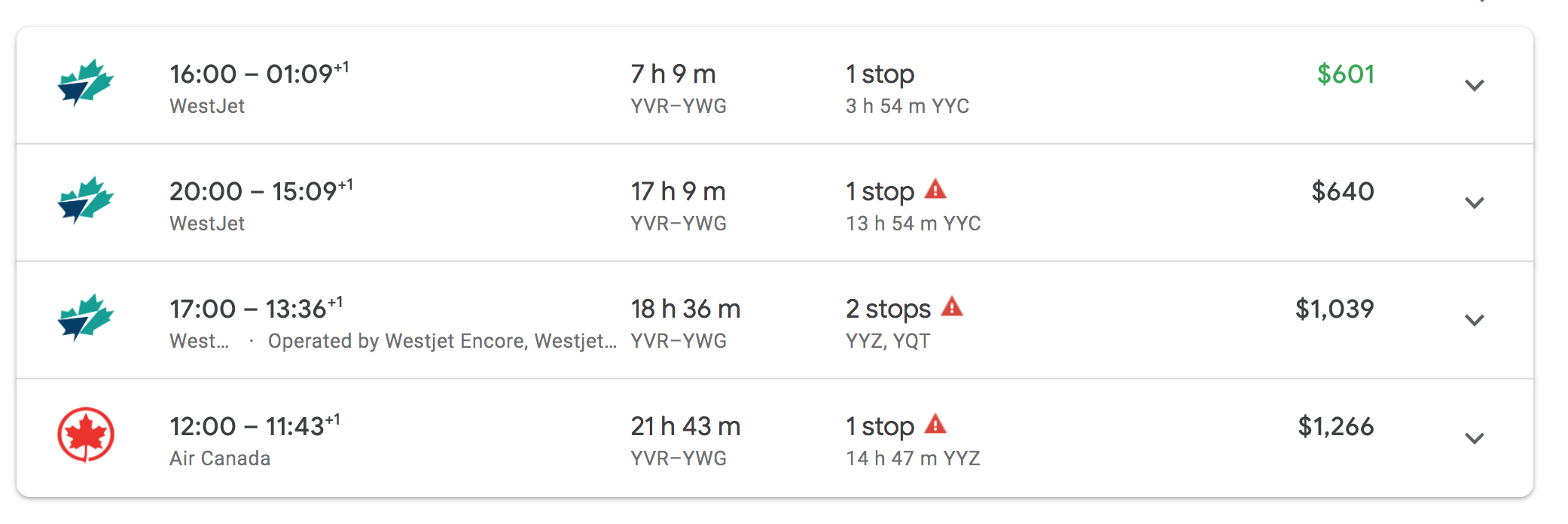
COVID-19 Has Made Flights From Vancouver to Winnipeg So Expensive That I, A 24 Year Old Woman With No Driver’s License, Bought A Car

I’ve been in Vancouver for just over two weeks now. Having completed my two weeks of isolation with no sign of respiratory distress (save for coughing fits induced by huffing my CBD vape pen like my anxious, middle-class life depends on it), I have turned my attention to slowly, begrudgingly making my way back to Manitoba.

A quick search for flights revealed these absolute goddamn bargains:

Screen Shot 2020-04-24 at 11.47.29 AM

It’s roughly 24 hours by road.

So, I’m one of those 20-somethings who just never got their license. I sat through hours of don’t-drink-and-drive footage with the bulk of my tenth-grade class in my high school gym, took my written test (which I failed (twice)) and at last, was granted my learner’s permit. Almost ten years ago. It’s probably the single most humiliating tenet of my adult life, so I’m just going to air it out now.

Driving fucking scares me. My very first time behind the wheel, I drove up someone’s LAWN after accidentally hammering the gas instead of the brake, nearly bursting through the powder room or whatever of a nice suburban family’s McMansion like the Kool-Aid man. Then there was the time I was nearly killed when my “designated driver” drove into a stoplight which subsequently dislodged from the pavement and fell onto the roof of the vehicle (He promised not to drink! He never said he wouldn’t do MDMA!) By the time I turned 18, I had essentially decided that driving was not going to be a part of my life. Regardless, I am now inexplicably the proud owner of a (very) used 2012 Dodge Journey.

There are two of us here (don’t worry! I have a supervising driver) and I guess the idea of pouring $1200 between us into the void just felt horrifying considering our current financial state. I have an absolutely stellar driver’s safety rating, meaning a minimal insurance rate, seeing as though I have almost never driven and therefore have not broken any traffic laws. I do need a car, I guess. It’s technically an investment. I also need a license, and probably therapy, but we can deal with that later in the wrong order.

We have four provinces ahead of us. We’ve booked an Airbnb in Kamloops for two nights, after which I’ll let my roommate- who has a relatively normal adult driving history- handle the tricky mountain pass to Canmore where we’ll stop for another night or two. After that, no clue. I’m assuming Saskatchewan will be my jurisdiction since it’s the only route I’m capable of navigating.

Screen Shot 2020-04-24 at 11.59.17 AM
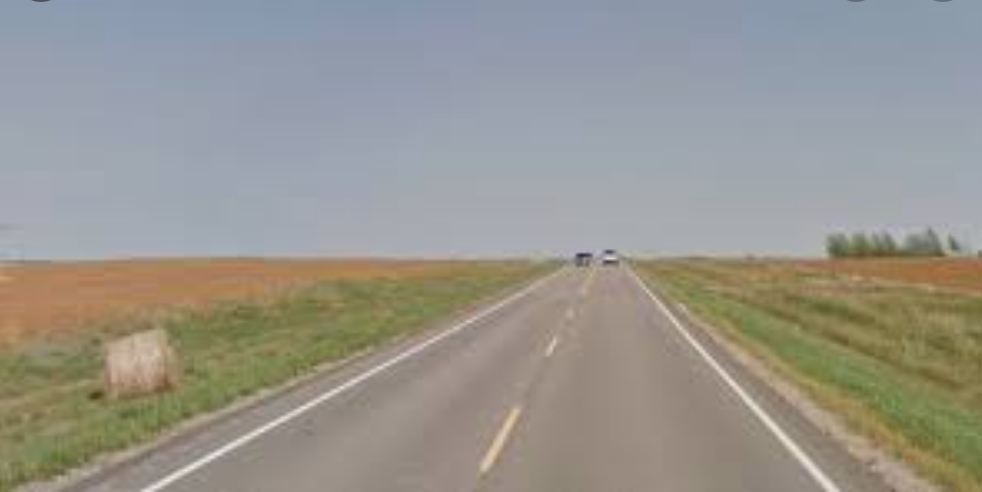
Saskatchewan looks like this.

Anyways, off we go. I’m thinking we’ll take the drive 4-6 hours per day, because our apartment is sublet until May 1st and we don’t have anywhere to be until then, and probably nowhere to be for 6-8 months after that either.

Stay safe, healthy and far, far away from highway 1. Godspeed.